
Laundry Tips & Fabric Care Blog

Practical, expert-written advice to help you care for your clothes and linens effectively.

How to read garment care labels
Fabric CareJanuary 15, 2025

How to Read Garment Care Labels Correctly

If you have ever pulled a favorite sweater from the dryer only to find it has shrunk two sizes, you already understand why garment care labels exist. These small tags carry a significant amount of useful information, yet most people either ignore them entirely or find the symbols confusing and unpredictable.

Care labels in the United States follow a standardized system governed by the Federal Trade Commission. Each symbol on the tag communicates a specific instruction about washing, bleaching, drying, ironing, and dry cleaning. The washing tub symbol represents machine or hand washing. A number inside the tub indicates the maximum water temperature in degrees Celsius. A hand inside the tub means hand wash only, while an X through the tub means do not wash with water at all.

The triangle symbol refers to bleaching instructions. An empty triangle means any bleach is acceptable. A triangle with diagonal lines means only non-chlorine bleach should be used. A crossed-out triangle means no bleaching at all. For delicate fabrics like wool, silk, and certain blends, bleach — even oxygen-based varieties — can cause irreversible damage.

The square symbol covers drying instructions. A circle inside the square refers to tumble drying. Temperature dots within that circle indicate low, medium, or high heat. A square with three vertical lines means hang dry, while a square with a horizontal line means lay flat to dry. Understanding these distinctions can extend the life of your garments significantly, particularly for structured clothing items like blazers or tailored trousers.

Our team at BlazingWash reviews every care label before processing any garment and selects the method that best matches the manufacturer's instructions. When in doubt, we always err on the side of caution and use the gentlest available option.

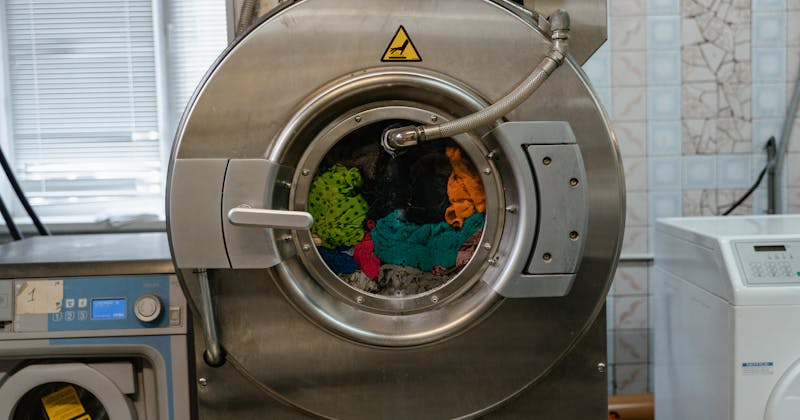
Eco-friendly professional laundry reduces water use
Eco-FriendlyFebruary 3, 2025

5 Ways Professional Laundry Services Reduce Your Water Use

Water conservation is an increasingly important consideration for households and businesses alike. While most people associate laundry with significant water consumption, professional laundry services are, in many cases, a more environmentally responsible choice than doing laundry at home. Here is why.

First, commercial washing machines are built for efficiency. A modern commercial front-load washer uses approximately 15 to 18 gallons of water per load, compared to older top-loading home machines that can use 30 to 40 gallons. When that same machine washes 20 to 30 pounds of laundry in a single cycle, the water-per-pound ratio becomes substantially lower than any home washing setup.

Second, professional facilities optimize load sizes. Home machines often run half-full loads, which wastes water proportionally. At BlazingWash, loads are organized and filled efficiently to maximize each cycle. This operational discipline alone can make a meaningful difference in overall water consumption.

Third, water recycling systems are commonly used in commercial laundry operations. Some of the rinse water from one cycle can be reused as wash water in the next, reducing freshwater intake. Residential machines lack this capability.

Fourth, professional detergents are more concentrated, meaning less product is needed per load. Lower detergent usage translates to less rinse water required to fully remove soap from fabrics.

Fifth, regular equipment maintenance in commercial settings ensures machines operate at peak efficiency. A home machine with worn-out seals or an uncalibrated water valve may be using far more water than the manufacturer intended. Commercial facilities run maintenance checks on a scheduled basis.

Choosing a professional laundry service is not only a convenience — it can also be a practical step toward reducing your household's environmental impact.

Treating fabric stains before washing
Stain RemovalFebruary 18, 2025

The Right Way to Treat Common Fabric Stains Before Washing

Speed matters when it comes to stain removal. The sooner you address a stain after it occurs, the greater your chances of removing it completely. However, how you respond in those first few minutes matters just as much as when you respond. Using the wrong treatment can permanently set certain types of stains, making professional removal significantly more difficult.

For protein-based stains like blood, egg, or sweat, cold water is your best first response. Hot water denatures proteins and can bond them permanently to fabric fibers. Rinse the affected area with cold water immediately, then gently blot — never rub — the stain with a clean white cloth. Rubbing spreads the stain and pushes it deeper into the weave. A small amount of enzyme-based stain remover applied before washing will break down the protein structure over time.

Oil and grease stains require a different approach. Blot away as much of the excess oil as possible without spreading it. Then apply a small amount of dish soap directly to the stain and work it in gently with your fingertip or a soft brush. The surfactants in dish soap are highly effective at lifting grease from fabric. Let it sit for five to ten minutes before rinsing with warm water.

Tannin stains from coffee, tea, red wine, and fruit juice respond well to immediate rinsing with cold water followed by a diluted white vinegar solution. Avoid using soap on wine or coffee stains before rinsing — soap can set tannin stains and make them nearly impossible to remove later.

Ink stains from ballpoint pens often respond to isopropyl alcohol. Place a clean cloth under the stained area, apply rubbing alcohol to the stain from above, and blot the ink away as it lifts. Do not pour alcohol directly onto the fabric without support underneath, as the dissolved ink can spread into a larger area.

When in doubt, bring the garment to BlazingWash promptly. Our staff are trained in stain identification and pre-treatment and can often achieve results that home treatment cannot.

Winter wardrobe storage tips
Seasonal CareMarch 2, 2025

Preparing Your Winter Wardrobe for Storage

Storing winter clothing incorrectly is one of the most common reasons people find their favorite coats and sweaters in poor condition when they retrieve them months later. Moths, mildew, fabric distortion, and persistent odors are all problems that can be largely prevented with a proper end-of-season routine.

The most important rule is straightforward: never store garments that are not completely clean. Any residual body oils, food particles, or perspiration stains that are not visible to the naked eye will attract insects and oxidize over time, resulting in yellow staining and fabric degradation. All winter items should be cleaned — either washed or dry-cleaned as appropriate — before being packed away.

Wool garments in particular should be dry-cleaned before storage. Wool is a natural protein fiber, which makes it especially attractive to clothes moths. A professional clean removes these attractants and eliminates any moth eggs that may already be present. After cleaning, store woolens in sealed containers rather than open closet space.

Avoid storing garments in plastic dry-cleaning bags for extended periods. These bags trap moisture and can cause mildew and yellowing. Instead, transfer cleaned garments to breathable cotton storage bags or lidded plastic bins lined with acid-free tissue paper.

Cedar blocks and lavender sachets are effective, natural moth deterrents. Cedar should be lightly sanded each season to refresh its potency. These options are safe for most fabrics and do not leave chemical residue the way moth balls do.